How to see one

November to March, in the last hour of daylight, wherever the starlings have chosen to sleep. Here’s what to know before you go.

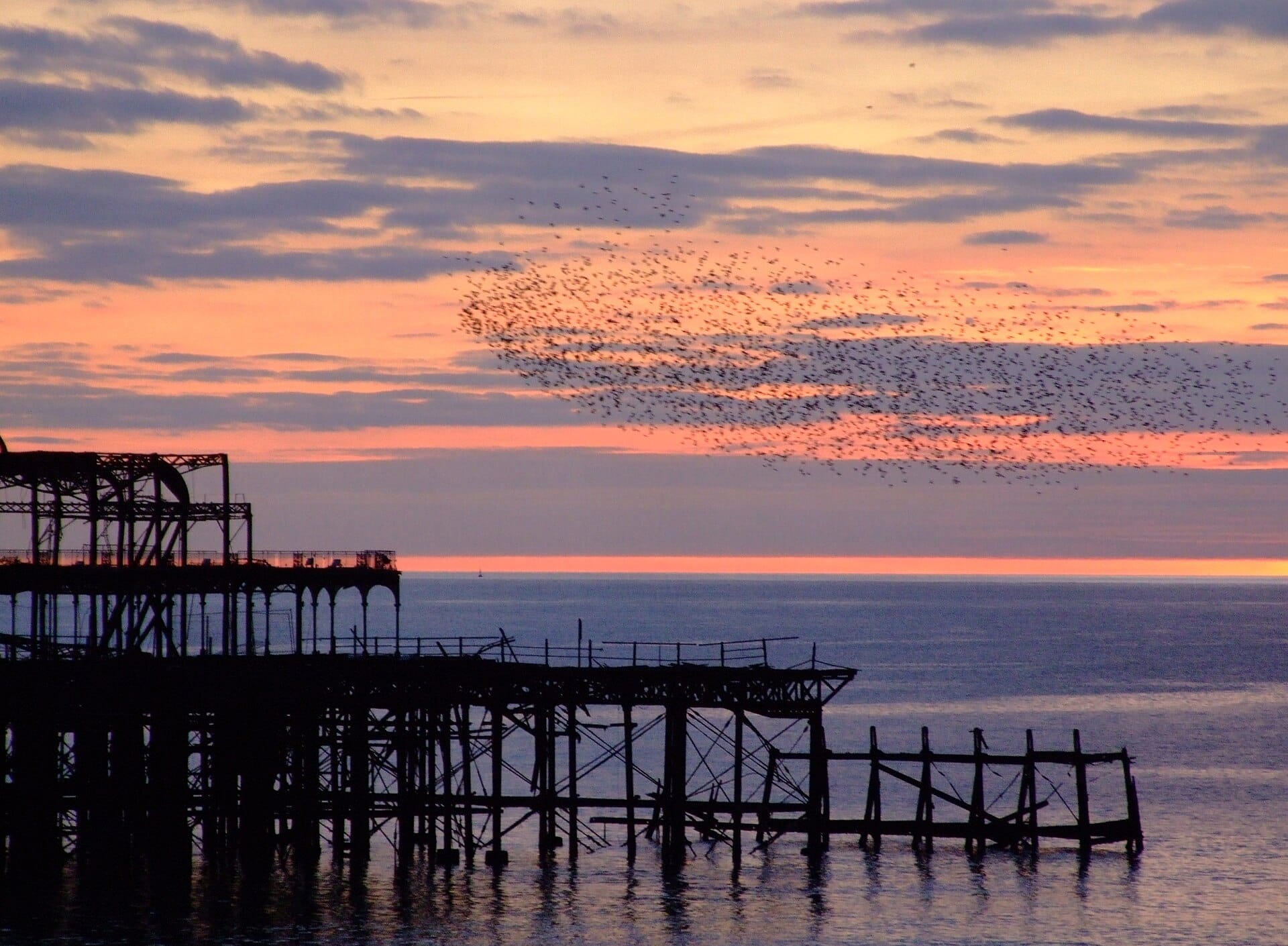
A long flock of starlings over the ruined West Pier in Brighton at sunset
Brighton’s West Pier at sunset. Photo: Les Chatfield, CC BY 2.0.

What it is

A murmuration is a flock of starlings, sometimes a few hundred and sometimes several hundred thousand, flying together over the place they’ll roost for the night. Each bird keeps track of its nearest neighbours, so the whole flock turns as one and the shape pours, folds and splits across the sky.

Nobody is completely sure why they do it. Safety in numbers is the best guess: a falcon finds it hard to pick one bird out of a moving cloud, and a big gathering may tell other starlings where the warm, safe roost is.
When to go

The season runs from November until about St Patrick’s Day, and it peaks in December and January. That’s when birds from Russia, Finland and Estonia arrive for the winter and join the resident starlings, and the biggest roosts form.

What time

The display happens at dusk, before the birds settle for the night. Be in place about an hour before sunset. Small groups arrive first and join up over the roost; the largest shapes usually come in the last twenty minutes, and then they drop in all at once. The sunset times on the map page work it out for any roost.

What weather

Still, clear evenings give the best shapes against the sky. On wet or windy nights the birds often go straight to roost with little display.

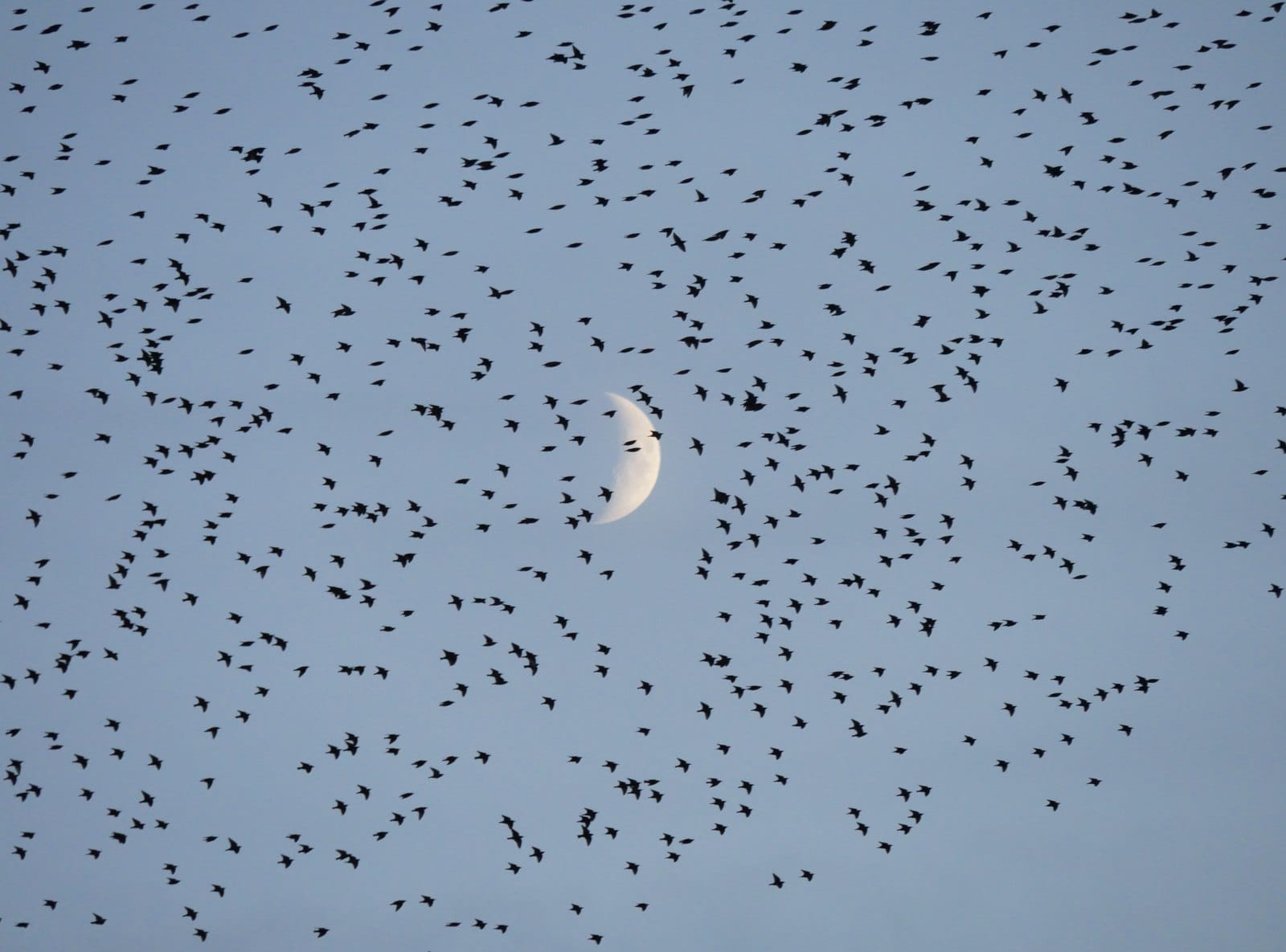
Starlings scattered across a pale evening sky with the moon among them
Moon and murmuration. Photo: James T M Towill, CC BY-SA 2.0.
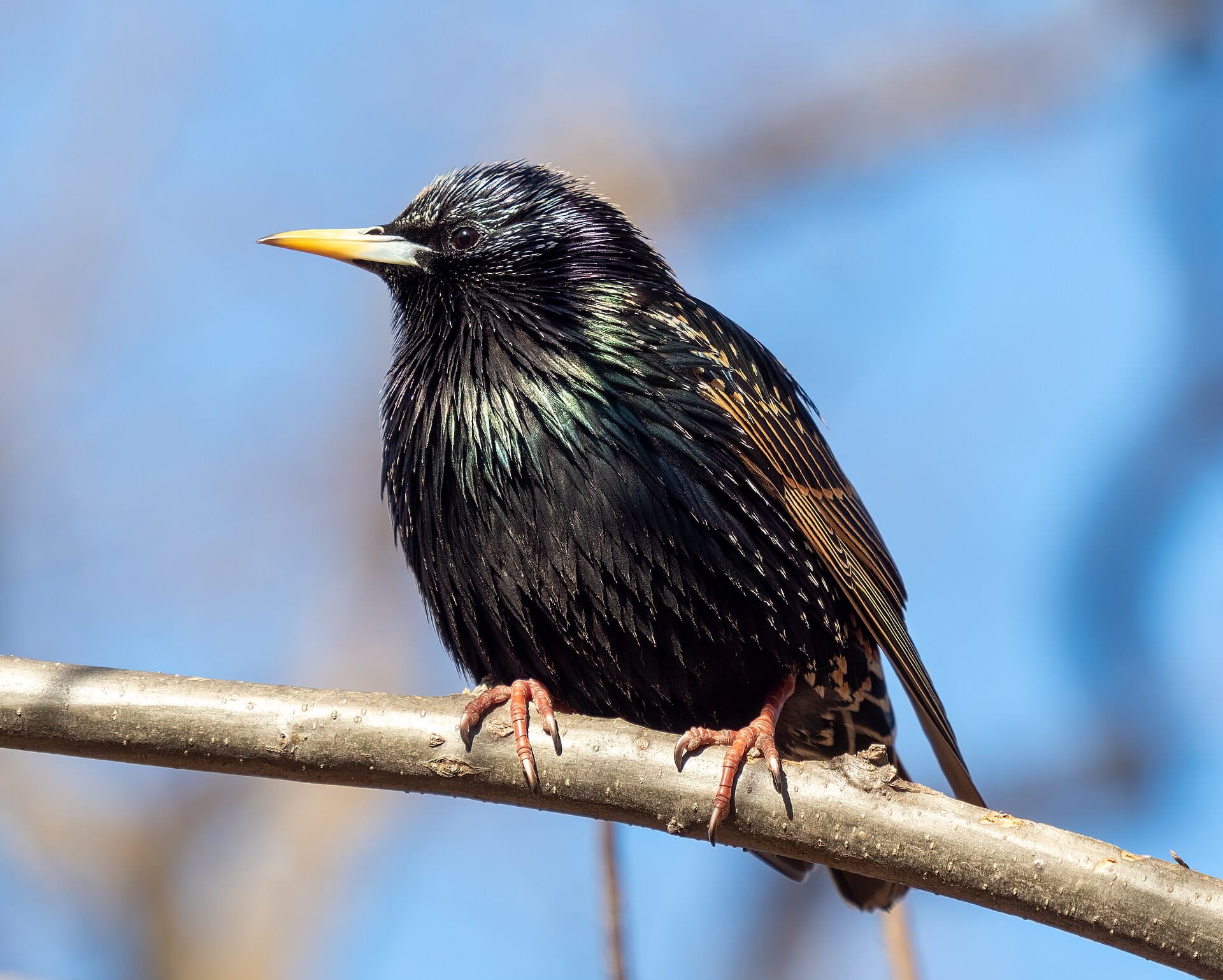
A single starling in winter plumage, its dark feathers glossed green and purple
One bird up close: a starling in winter. Photo: Rhododendrites, CC BY-SA 4.0.

Finding a roost

Start with the map: it shows where people saw them last night. Roosts move from night to night and from year to year, so a recent report beats a famous name.

If there’s nothing near you, watch the sky in the late afternoon. Starlings fly to the roost in small groups from every direction, and they all head the same way. Follow the direction the flocks are flying and you’ll find it.

Reedbeds, lakes, piers, bridges and big stands of conifers are all favourite places to roost.

Watching well

  • Stay on paths and public roads. Many roosts are on private land: ask first, and respect a no.
  • Park considerately. Popular roosts draw crowds, and blocked gates and lanes are what turn neighbours against them.
  • No drones over the roost. Keep noise down, and don’t use a flash or torch at the birds.
  • Leave before full dark, quietly. A roost that is disturbed can be abandoned.

Why your report counts

Starlings are on the Amber list of birds of conservation concern in Ireland and the Red list in the UK: there are far fewer than there were. Knowing where the roosts are, and how big, is the first step to protecting them.

BirdWatch Ireland has run the Irish Starling Murmuration Survey every winter since 2020/21. Our form asks for the same things they do, a place, a date and a rough count of birds over the roost, so the reports here could be shared with them. You can also send your sighting to their survey directly.

Log a sighting